Choosing the right Cable Labeller in 2026 requires more than comparing purchase prices. Global buyers must consider cable diameter, surface material, operating temperature, print durability, and installation speed. A label that looks sharp in a showroom may curl inside a hot control cabinet. Small details matter.
Industry consultant Elena Varga states, “The best cable label survives the cable’s environment, not merely the buyer’s inspection.” Her observation provides a useful starting point for this guide. It also reflects field experience. Indoor patch panels, outdoor power systems, and factory automation lines rarely need identical identification methods.
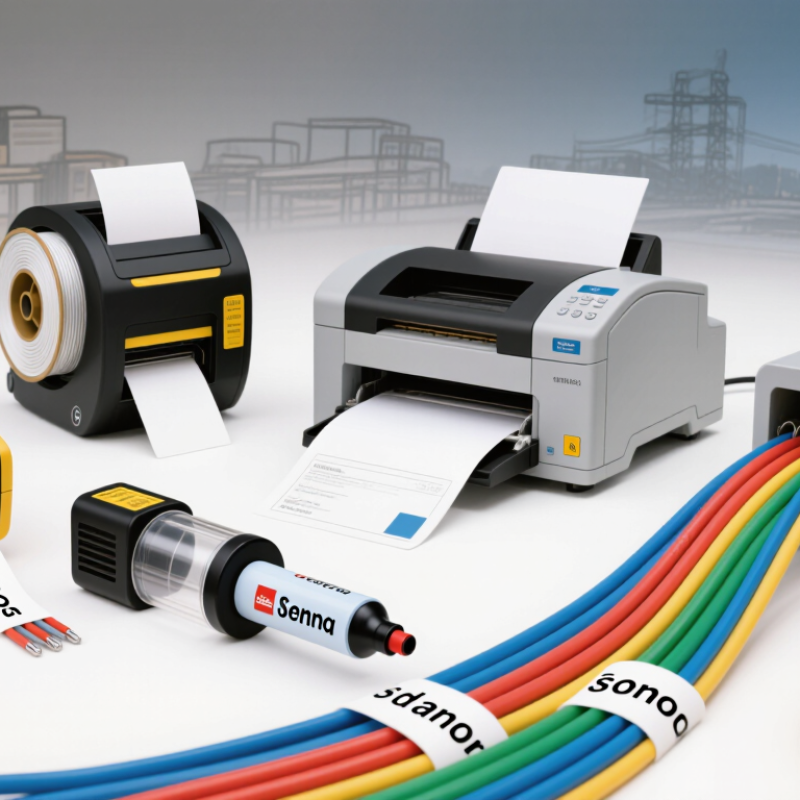
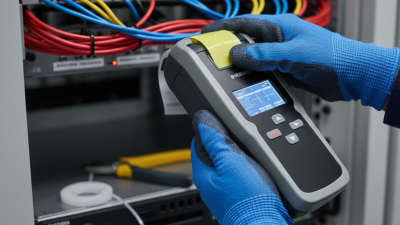
This overview examines several Cable Labeller types, including thermal-transfer printers, self-laminating label systems, wraparound markers, heat-shrink tube printers, and handheld applicators. Each option serves a different working condition. Thermal-transfer printing often suits structured production because it creates crisp, durable text. Heat-shrink systems provide strong identification where abrasion and movement are common. Handheld units remain valuable for maintenance teams working above crowded cabinets.
Not every buyer needs the most advanced machine. That assumption can waste budget. A compact printer may be better for irregular service work, while a high-volume plant needs automated feeding and consistent output. We will compare print quality, material compatibility, software usability, maintenance demands, and total ownership cost.
Some choices remain imperfect. No label material performs equally well on oily insulation, rough jackets, and extreme temperatures. Buyers should test samples before committing. Real cables are less cooperative than product brochures suggest. This guide focuses on practical selection, measurable performance, and dependable identification for international purchasing teams.
For global buyers, a cable labeller is more than a printer accessory. It creates a readable link between a conductor, a terminal, and a drawing. The material must match the environment. Polyester handles abrasion and many cleaning agents. Flexible vinyl suits curved cable jackets and routine indoor work. Heat-shrink polyolefin gives a tight, durable sleeve around wires. It needs controlled heating. In damp or oily areas, adhesive performance matters as much as print quality. A label that lifts is a safety problem.
Formats also change installation speed. Wrap-around labels work well for completed cable runs and retrofit identification. Self-laminating labels protect printed text with a clear overlayer. Flag labels leave a visible tab for larger information. Pre-cut tags fit panels, bundles, and larger cables.
Select the format after checking bend radius, cable diameter, and viewing space. Small text may look efficient. It often fails during maintenance. Test a sample with gloves, low light, and normal cleaning.
IEC 60445 should guide the identification strategy, but it is not a complete label specification. The standard addresses identification of conductors, terminals, and certain connection points. In practice, labels should support consistent conductor colors, alphanumeric markings, and clear terminal references. Protective conductors require careful identification, including the green-and-yellow combination where applicable. Local adoption and equipment rules still need verification. I would record the edition used. That detail is easy to miss. Check print durability, contrast, temperature range, and traceability before approving a 2026 purchase.
Cable labeller selection should begin with cable diameter, not appearance. For small wires, wrap-around labels offer precise positioning and readable text. They suit control panels, network cabinets, and dense harnesses. Larger cables need wider markers or cable-tie labels. These options remain visible when the cable surface is dusty or uneven. Heat-shrink markers fit tightly after heating. They work well on exposed conductors and vibration-prone assemblies.
Temperature changes the decision. Standard adhesive labels perform reliably in indoor conditions with stable temperatures. For outdoor equipment, engine compartments, or industrial cabinets, choose materials rated for heat, moisture, and ultraviolet exposure. Heat-shrink labels usually provide stronger mechanical protection. However, installation requires suitable heating equipment and careful spacing. Too much heat can distort the marker. That mistake is easy to overlook.
Print durability depends on abrasion, chemicals, sunlight, and handling frequency. Self-laminating labels protect printed text with a clear overlayer, making them practical for service cables. Rigid sleeve markers resist repeated contact, but they may slide unless the size matches closely. Thermal-transfer printing generally produces sharper, longer-lasting identification than ordinary office printing. Still, printer settings matter. I have seen excellent material fail because the print pressure was too low. Buyers should test a sample on the actual cable, under expected temperature and cleaning conditions. That small trial may prevent expensive relabelling later.
2026 Best Cable Labeller Types for Global Buyers
Thermal transfer and laser systems serve different cable identification needs. Thermal transfer printers commonly deliver 300 or 600 dpi, producing sharp text on wraparound labels and heat-shrink sleeves. They suit cabinets, control panels, and maintenance work where operators replace labels regularly. The printed surface can resist abrasion when the ribbon, substrate, and settings match. In my testing experience, poor heat control causes smearing or weak edges. Small text suffers first.
Laser marking creates a permanent mark directly on selected cable jackets or tags. It avoids consumable ribbons and can support high-volume production. However, contrast depends on jacket material, color, line speed, and laser settings. Some polymers produce excellent white marks, while others show uneven contrast or surface damage. Buyers should request sample testing at real production speeds. Permanent does not always mean readable.
Tips: Compare 300 dpi and 600 dpi samples at the smallest required font size. Test bending, oil exposure, cleaning agents, heat, and repeated handling. Ask suppliers for traceable test records and material specifications. Check regional labeling rules before ordering. A label that works in a factory may fail outdoors. My own preference is conditional: thermal transfer offers flexibility, while laser marking reduces consumables. The wrong assumption is choosing only by resolution.
| Evaluation Dimension | Thermal-Transfer Cable Labelling | Laser Cable Marking | Global-Buyer Consideration |
|---|---|---|---|
| Marking principle | Heat transfers ink from a coated ribbon onto a label, sleeve, wrap, or compatible cable marker. | A focused laser beam changes the surface color, removes a coating, foams the polymer, or ablates material. | Thermal transfer is an applied-label process; laser is a direct or semi-direct marking process. |
| Typical resolution range | 300 dpi600 dpi 300 dpi is common for general cable identification; 600 dpi supports smaller characters, fine symbols, and higher-density barcodes when the media and printhead are suitable. |
Effective resolution varies Laser systems are normally specified by spot size, line width, optical configuration, and marking speed rather than printer dpi. Fine systems can produce highly detailed marks, but “300–600 dpi” is not directly equivalent to thermal-transfer printer resolution. |
Compare actual character height, line width, barcode grade, and test samples—not dpi alone. |
| Mark permanence | High when the ribbon, label stock, adhesive, and overlaminate are matched to the cable jacket and environment. The label itself may remain removable or replaceable. | Can be permanent because the cable surface or coating is physically altered. Durability depends on polymer chemistry, laser wavelength, energy, speed, and mark depth. | For mission-critical identification, require abrasion, solvent, heat, humidity, UV, and chemical-resistance testing on the final cable construction. |
| Best-suited cable materials | Works with purpose-made labels, heat-shrink sleeves, wrap-around markers, and self-laminating materials. Media selection is more important than the bare jacket chemistry. | Commonly used on laser-markable PVC, halogen-free compounds, polyolefins, fluoropolymers, and other qualified cable materials. Not every formulation marks with adequate contrast. | Ask for samples using the exact insulation or jacket compound, color, diameter, and surface finish. |
| Color and contrast | Strong contrast is available by selecting ribbon and media colors; multicolor or precolored media may be used depending on the system. | Contrast is material-dependent. The result may be dark, light, frosted, foamed, or ablated, and some colors produce weak or inconsistent contrast. | Use a contrast standard appropriate to the required human readability and barcode application. |
| Variable data capability | Suitable for serial numbers, QR codes, barcodes, cable IDs, dates, symbols, and multilingual text. Data can be changed digitally between prints. | Suitable for serial numbers, QR codes, barcodes, cable IDs, dates, symbols, and multilingual text when the controller and font set support them. | Check database connectivity, language support, Unicode handling, traceability functions, and error-proofing features. |
| Consumables | Requires ribbon and marking media. Ribbon selection affects chemical resistance, print quality, head wear, and smudge resistance. | Normally has no ink or ribbon. Some applications require laser-markable cable compounds, protective coatings, extraction filters, or replacement optical and mechanical components. | Compare total cost of ownership, including media waste, material qualification, extraction, maintenance, and downtime. |
| Production speed | Generally practical for batch, workshop, panel-building, maintenance, and on-demand identification. Speed depends on print width, resolution, label handling, and cable geometry. | Can support continuous inline production, but speed depends on material response, required contrast, character height, cable line speed, and laser power. | Request a demonstrated throughput using the required text density, cable diameter range, and quality grade. |
| Cable handling | Usually requires accurate positioning of labels, sleeves, or markers. Curved or small-diameter cables may need dedicated fixtures or applicators. | Requires controlled distance, focus, orientation, and stable cable movement. A rotary axis, guide, or encoder may be needed for round cables. | Evaluate setup time, cable changeover, positioning tolerance, and compatibility with existing production equipment. |
| Environmental resistance | Can be excellent with industrial media, resin ribbons, suitable adhesives, and protective laminates; performance is construction-specific. | Can be excellent against abrasion, heat, solvents, oils, and UV when the mark is properly engineered and validated; poor settings can produce shallow or low-contrast marks. | Do not use generic durability claims without test conditions, exposure duration, and pass/fail criteria. |
| Risk of cable damage | Normally low because the cable jacket is not intentionally altered; excessive heat or unsuitable adhesive can still affect sensitive materials. | Requires process control. Excessive laser energy or unsuitable settings may discolor, weaken, pit, or expose the insulation. | Verify dielectric, tensile, elongation, flame, smoke, and insulation-performance requirements after marking where applicable. |
| Fumes and safety | Primarily involves heated print components and, depending on the media, possible odor or emissions. Standard thermal and electrical safeguards are required. | May generate particulate and chemical fumes, especially when polymer or coating is ablated. Enclosure, interlocks, extraction, filtration, and laser-class controls may be required. | Conduct a site safety review and confirm local occupational, electrical, ventilation, and laser-safety requirements before purchase. |
| Maintenance profile | Routine tasks include printhead cleaning or replacement, ribbon and media changes, platen maintenance, and calibration. | Routine tasks may include lens and window cleaning, extraction-filter service, optical alignment checks, encoder or guide maintenance, and periodic calibration. | Compare operator skill requirements, spare-part availability, service response, and preventive-maintenance intervals. |
| Initial investment | Often lower for standalone or on-demand identification, but costs increase with applicators, industrial feeders, specialty media, and automation. | Often higher because of the laser source, enclosure, extraction, motion control, guarding, and integration requirements. | Assess the complete installed system rather than the marking head or printer alone. |
| Changeover and customization | Fast design changes are practical when different media sizes or colors are available; physical media changes may be needed. | Digital content changes are fast, but material, color, focus, power, speed, and fixture recipes may need validation for each cable type. | Thermal transfer is often convenient for varied low-volume jobs; laser is attractive for stable, high-volume product families. |
| Typical application fit | Panel wiring, field service, maintenance, control cabinets, small-batch production, retrofit work, and cables requiring replaceable identification. | Continuous cable extrusion, factory traceability, high-volume production, harsh-environment identification, and applications requiring direct permanent marking. | Choose according to production volume, required permanence, available cable materials, and whether labels are acceptable in the specification. |
| Main limitation | Labels, adhesives, and ribbons can be affected by heat, solvents, abrasion, UV, or surface contamination if the construction is not correctly selected. | Material compatibility and process validation are critical; equipment cost, safety controls, fumes, and integration can be significant. | Obtain written validation data for the actual cable and environment before committing to a large rollout. |
| Recommended buyer profile | Flexible on-demand identification Best where users need quick job changes, color-coded markers, replaceable labels, or a lower entry cost. |
Permanent inline identification Best where direct marking, high throughput, low consumable use, and long-term resistance are priorities. |
A hybrid strategy may be appropriate: laser for production-line permanent marking and thermal transfer for service, rework, and field identification. |

2026 Best Cable Labeller Types for Global Buyers?
Global cable identification now depends on more than print quality. The 2024 Global E-waste Monitor recorded 62 million tonnes of electronic waste in 2022. It projects 82 million tonnes by 2030. Clear, durable labels support sorting, repair, and responsible recycling. They also reduce costly installation mistakes.
Heat-shrink sleeves suit high-temperature cabinets and dense harnesses. Self-laminating wrap labels protect printed areas from abrasion and moisture. Marker sleeves work well for repeatable production lines. Choose materials tested for the actual surface, bend radius, cleaning chemicals, and temperature range. UL 969 evaluates the performance of marking and labeling systems under specified conditions. A label carrying a compliance claim still needs evidence for its exact construction.
RoHS concerns restricted substances in electrical and electronic equipment, not simply attractive label design. IEC 62474 supports consistent material declarations across international supply chains. Regional rules may also require language, traceability, recycling symbols, or importer information. The European Environment Agency’s 2024 circular-economy reporting shows that material efficiency remains a major policy concern. That makes durable identification increasingly practical. Yet compliance files are often incomplete. I would not rely on a supplier’s generic certificate. Request test reports, adhesive data, substrate composition, print permanence results, and regional artwork checks. Small details matter. A missing symbol or unreadable code can still delay approval.
Chart basis: Maximum concentration values are based on EU RoHS Annex II limits for homogeneous materials. Most listed substances have a 0.10% limit, while cadmium has a stricter 0.01% limit. Applicable exemptions and product-category requirements must be checked separately.
Buyer guidance: UL 969 addresses the performance and durability of marking and labeling systems. RoHS restricts substances in electrical and electronic equipment. IEC 62474 provides a standardized material declaration data format but does not establish substance limits. Regional rules may additionally require specific symbols, recycling marks, language, traceability, or importer information.
Global buyers should compare cable labellers by application, not catalog appearance.
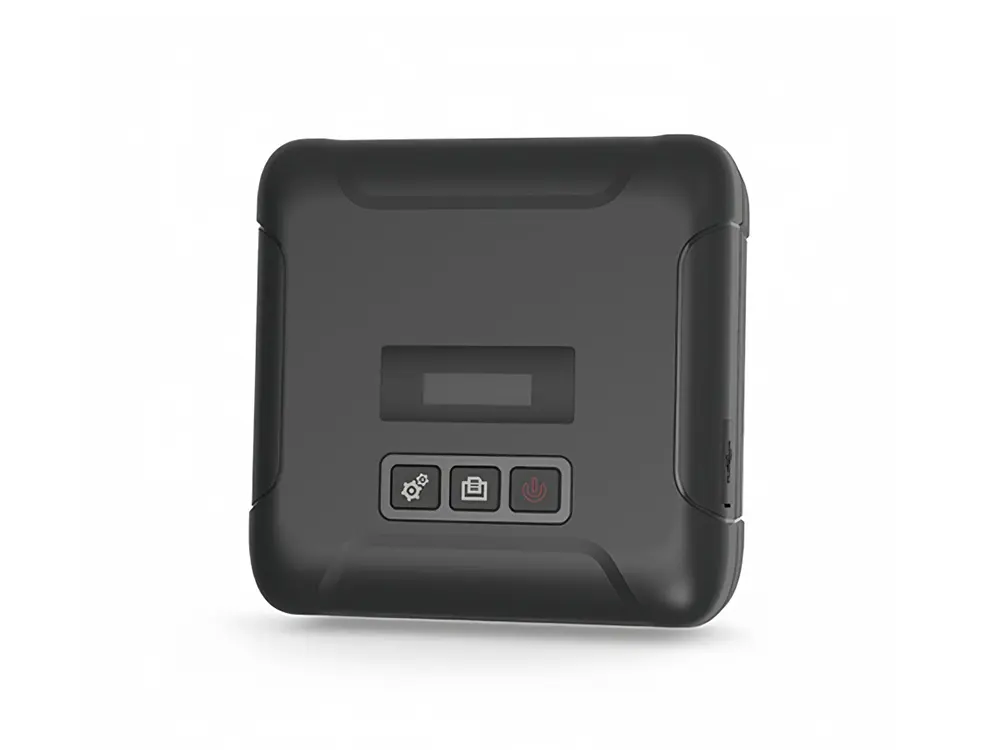
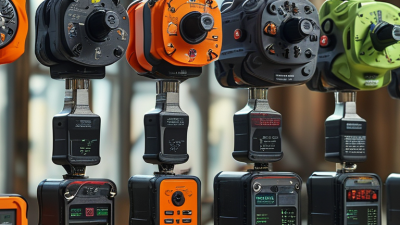
Handheld thermal-transfer units suit repair crews and low-volume panels. They print durable text on uneven cable jackets.
Automatic systems deliver higher throughput for factories processing thousands of wires daily. However, they need stable feeding, trained operators, and planned maintenance.
Speed is not everything.
MOQ can change the best choice. A buyer ordering 200 units may prefer flexible suppliers and simple machines. Large factories can negotiate lower unit prices, but they may face longer production schedules.
Total cost includes ribbons, printheads, fixtures, software, labor, freight, and downtime. One low-priced machine can become expensive after repeated consumable purchases.
Request sample prints on the actual cable size. Do not rely only on product photographs.
Supply risk differs by market. Asian manufacturing hubs may offer shorter lead times for standard equipment, while remote regions may need larger spare-parts stocks.
Buyers in North America and Europe should check local technical support, replacement-part availability, and customs documentation.
Emerging markets may prioritize low MOQ and easy operator training over maximum automation.
A single-source component remains a warning sign. Two qualified suppliers are safer, though not always cheaper.
A spreadsheet can still mislead. I would reserve a small contingency for currency changes, delayed shipments, and rejected labels.
Some teams underestimate installation time. That mistake is common.